Selling a House With Solar Panels That Are Still Financed in Massachusetts

Table of Contents
Selling a house with financed solar panels in Massachusetts can be more complicated than selling a home with a system that has already been paid off. Solar panels may lower electricity bills and appeal to energy-conscious buyers, but an outstanding solar loan can raise questions about ownership, liens, mortgage approval, and closing costs.
Imagine you installed solar panels on your home in Quincy five years ago. The system works well, and your monthly electric bills have dropped. Now you are ready to sell, but you still owe $19,000 on the solar loan. You have found a buyer who loves the house, yet their lender wants to know whether the solar financing must be paid off before closing.
Suddenly, what seemed like a simple home improvement has become another issue to resolve before the sale can move forward.
The good news is that you can generally sell a Massachusetts house with financed solar panels. The important part is understanding the financing agreement, determining whether the lender has a security interest in the panels or property, and deciding how the outstanding balance will be handled.
For homeowners in Boston, Brookline, Newton, Cambridge, Quincy, and surrounding Greater Boston communities, addressing these questions early can help prevent expensive surprises.
Can You Sell a House With Financed Solar Panels in Massachusetts?
Yes. Having an outstanding solar panel loan does not automatically prevent you from selling your home.
However, selling a house with financed solar panels requires an understanding of the loan agreement and the obligations that may remain when ownership changes.
Some homeowners purchase solar systems using unsecured personal loans. Others finance the installation through agreements secured by the solar equipment or, in certain cases, the real estate itself.
These arrangements are not interchangeable.
If the solar loan is unsecured, selling the house may not require a lien release related to the equipment. Nevertheless, the seller generally remains responsible for the debt unless the lender agrees to another arrangement.
If the loan is secured by the panels, the lender may have a legal interest in the equipment until the balance is paid. That interest may need to be addressed before a buyer can obtain acceptable title and financing.
A loan secured by the real estate can create additional closing requirements.
The key is to review the actual documents rather than assume that all solar loans work the same way.
What Happens to a Solar Loan When You Sell Your House?
For many homeowners, the simplest solution is paying off the remaining solar loan balance from the proceeds of the home sale.
Suppose your house sells for $650,000. You owe $310,000 on your mortgage and $19,000 on the solar loan.
If the lender requires the solar loan to be paid off, the closing attorney may be able to arrange payment of both debts from the sale proceeds, subject to the contract, lender instructions, and available funds.
You would not necessarily need to pay the entire solar balance out of pocket before listing the property.
However, you would receive less money at closing because the solar payoff reduces your net proceeds.
Some lenders may permit a qualified buyer to assume an existing solar loan. This is not automatic, and many agreements do not allow a straightforward transfer.
Even when an assumption is permitted, the buyer may need credit approval, and the lender must agree to the arrangement. The parties should also obtain written confirmation that the seller has been released from future liability, if that is part of the agreement.
Never assume that a buyer’s promise to make the remaining payments removes your responsibility for the loan.
Understanding Solar Panel Liens and UCC Filings in Massachusetts
One of the most confusing parts of selling a house with financed solar panels is discovering a UCC filing during the title search.
A Uniform Commercial Code financing statement, often called a UCC-1, gives public notice of a lender’s claimed security interest in specified collateral.
In some solar financing arrangements, the collateral is the solar equipment rather than the entire house. Certain filings involving equipment attached to real estate may also appear in the property’s land records.
This distinction matters.
A UCC filing involving solar panels is not necessarily the same as a mortgage lien against the home. However, it may still create questions for the buyer’s lender or closing attorney.
If the solar debt must be paid off, the parties may need documentation confirming the lender’s security interest has been released or terminated.
Without the required paperwork, the transaction could be delayed even if the buyer and seller have agreed on everything else.
The Massachusetts Clean Energy Center’s guidance on buying or selling a home with solar specifically advises sellers to disclose existing solar financing and check for possible UCC-1 filings.
Homeowners should request information from their solar lender well before the closing date rather than wait for a title problem to appear.
Can Financed Solar Panels Affect a Buyer’s Mortgage Approval?
Yes. Solar financing can affect how a mortgage lender evaluates a property and the buyer’s financial obligations.
A lender may need to determine who owns the solar system, whether another company has a security interest in the equipment, and whether the buyer will become responsible for any outstanding payments.
If the buyer assumes a solar loan, the new payment obligation may affect the buyer’s debt-to-income ratio and mortgage qualification.
The lender may also need to review title documents and determine whether the solar financing affects its mortgage lien position.
Another issue involves the property’s appraised value.
A homeowner may believe the solar system adds $25,000 to the home’s value because that was the installation cost. But the original price of the system does not establish how much value it contributes to the property today.
Appraisal treatment can depend on ownership, financing terms, and whether the equipment can be repossessed.
This is especially important in competitive Greater Boston markets, where buyers may already be stretching their budgets to purchase a home.
A buyer who qualifies for a mortgage without an additional solar payment may not qualify under the same terms if the lender requires them to assume that debt.
If these issues are discovered late, a buyer may request new terms, delay the closing, or withdraw when permitted by the purchase agreement.
Homeowners facing similar transaction problems may find our guide to selling a house after a failed buyer inspection in Boston useful when evaluating their next steps.
What Is the Difference Between Financed, Leased, and Owned Solar Panels?
Before selling, homeowners need to understand whether they own the solar system.
If the panels were purchased outright, there may be no separate financing agreement to resolve. The seller should still provide relevant system documents and confirm whether any other obligations apply.
If the panels were financed through a loan, the homeowner may own the equipment while owing money to a lender. The loan’s security arrangements determine what must happen before or during the sale.
A solar lease is different because the solar company typically retains ownership of the equipment. The homeowner pays for the use of the system under a contract.
A power purchase agreement, or PPA, usually involves a third party owning the equipment while the homeowner purchases the electricity it produces under agreed terms.
With a lease or PPA, the seller may need to transfer the agreement to a qualified buyer, negotiate a buyout, or follow another option provided by the contract.
A buyer may not want to take over a long-term agreement, especially if the payment terms are less attractive than expected.
Some agreements include annual payment increases, transfer restrictions, or fees that can affect negotiations.
A seller should not advertise leased equipment as fully owned or promise that a solar agreement can be transferred without confirming the provider’s requirements.
Will Solar Panels Increase the Value of Your Massachusetts Home?
Solar panels can make a property more appealing, particularly to buyers interested in reducing electricity costs.
But their impact on resale value is not guaranteed.
A system’s age, condition, ownership, energy production, remaining warranty, and financing arrangement can all affect how buyers evaluate it.
A newer system with strong production records and no outstanding debt may be easier to market than an older system with a substantial remaining loan balance.
Buyers may also consider the roof beneath the panels.
If the roof will need replacement soon, removing and reinstalling the solar equipment could add to the expense. That concern can affect negotiations even when the panels are working properly.
For an older home in Dorchester, Roslindale, Hyde Park, or Brookline, the solar system is only one part of the property’s overall condition.
A buyer may appreciate lower utility bills but still worry about aging electrical systems, roof repairs, foundation issues, or outdated plumbing.
Sellers should focus on the property’s likely net sale proceeds rather than assuming the solar system will automatically increase the selling price by its original installation cost.
What If You Cannot Afford to Pay Off the Solar Panels Before Selling?
This is a common concern.
A homeowner may need to sell because of relocation, divorce, inheritance, financial pressure, or the cost of maintaining an older property.
Coming up with thousands of dollars to pay off a solar loan before closing may not be realistic.
Fortunately, paying the balance before listing is not always necessary.
If the lender and closing arrangements allow it, the outstanding loan can sometimes be paid from the sale proceeds.
The first step is requesting a written payoff statement showing the amount needed to satisfy the loan by a specific date.
Next, calculate the expected proceeds after the mortgage payoff, solar loan payoff, closing expenses, and any other obligations.
If there is sufficient equity, the transaction may be straightforward.
If the home has limited equity, the situation becomes more difficult.
For example, a homeowner who owes $430,000 on the mortgage and $28,000 on the solar loan may have little money remaining if the property sells for $475,000 after accounting for selling expenses.
The homeowner may need to negotiate with creditors, reconsider the sale price, or seek legal and financial guidance about available options.
A cash buyer does not automatically eliminate the solar debt or the lender’s rights.
The financing still needs to be addressed under the loan documents and closing agreement.

Can You Sell a House With Financed Solar Panels As-Is?
Yes. Selling a house as-is generally means the buyer accepts the property’s physical condition, subject to the purchase agreement and applicable legal obligations.
However, an as-is sale does not automatically mean the buyer assumes your solar loan.
The condition of the property and the financing attached to its solar equipment are separate issues.
A buyer may be willing to purchase an older house with an aging roof, outdated kitchen, or unfinished repairs. That same buyer may still require the seller to satisfy a solar loan and provide any necessary releases before closing.
This distinction is important for Massachusetts homeowners who want to avoid spending money on repairs.
For example, suppose a homeowner in Medford has a house with financed solar panels, an outdated heating system, and a basement that needs waterproofing.
The homeowner may not want to invest in renovations before selling.
Our guide to selling a distressed property in Boston, Massachusetts explains how owners can compare repairs, traditional listings, and as-is offers when a property needs substantial work.
An as-is sale may reduce the burden of preparing the home, but the solar financing must still be reviewed.
Is Selling to a Cash Home Buyer Easier When Solar Panels Are Financed?
A direct cash sale may remove some of the complications associated with a traditional buyer’s mortgage approval.
Because the buyer is not relying on a conventional mortgage to complete the purchase, the transaction may avoid certain lender underwriting and appraisal requirements.
That can be helpful when the property has an unusual financing arrangement or needs significant repairs.
However, a cash buyer will still want to understand who owns the solar equipment, whether any security interests exist, and what must happen to transfer the property under the agreed terms.
The buyer may require the solar loan to be paid off at closing, or another arrangement may be negotiated if the lender and all parties approve.
A legitimate cash buyer should not promise to make an outstanding solar loan disappear.
For sellers who value a simpler process, comparing a direct offer with a traditional listing can still make sense.
We Buy Old Properties works with homeowners throughout Greater Boston who want to explore selling their house for cash without preparing the property for traditional showings and repairs.
The best choice depends on the home’s condition, the remaining solar balance, the available equity, and the seller’s timeline.
How to Prepare for Selling a Massachusetts House With an Outstanding Solar Loan
The most useful step is gathering the right information before listing or accepting an offer.
Start with the original solar installation agreement and loan documents. Identify the lender, the current balance, the payment terms, and whether the agreement allows a buyer to assume the debt.
Request a payoff statement and ask whether a UCC filing or another recorded security interest must be released.
You should also gather warranties, installation permits, equipment details, maintenance records, and electricity production information.
If the system participates in a Massachusetts solar incentive program, determine whether any payments or reporting responsibilities must be transferred or otherwise addressed when the property changes hands.
Share the information with your real estate agent and closing attorney early.
If a buyer is financing the purchase, the buyer’s lender should receive the relevant documents before the transaction reaches its final stages.
Do not wait until a few days before closing to discover that the solar provider requires additional paperwork or approval.
A little preparation can prevent an otherwise manageable issue from becoming the reason a sale is postponed.
Frequently Asked Questions About Selling a House With Financed Solar Panels
Can I sell my Massachusetts house if I still owe money on the solar panels?
Yes. An outstanding solar loan does not automatically prevent a home sale. You may be able to pay the loan from closing proceeds, or the lender may allow another arrangement. The available options depend on the financing agreement.
Do I have to pay off my solar loan before closing?
Not always. Some loans can be paid off as part of the closing process using sale proceeds. Other agreements may require different steps. Ask the lender and closing attorney to confirm the requirements.
Can the buyer take over my solar panel payments?
Possibly, but only if the lender permits an assumption and approves the buyer. A buyer’s willingness to make payments does not, by itself, release the seller from the original loan.
What happens if a UCC filing appears during the title search?
The closing attorney and lender may need to review the filing to determine what property it covers and whether a release, termination, subordination, or another resolution is required before closing.
Will a cash buyer purchase a house with financed solar panels?
Some cash buyers may consider the property, but the solar agreement must be reviewed. A cash purchase does not automatically cancel an outstanding loan or remove a lender’s security interest.
Can I sell a house with financed solar panels and a roof that needs replacement?
Potentially, yes. However, the buyer may consider the cost of roof repairs and any required solar panel removal or reinstallation. These issues can affect the offer, inspection negotiations, and the property’s overall marketability.


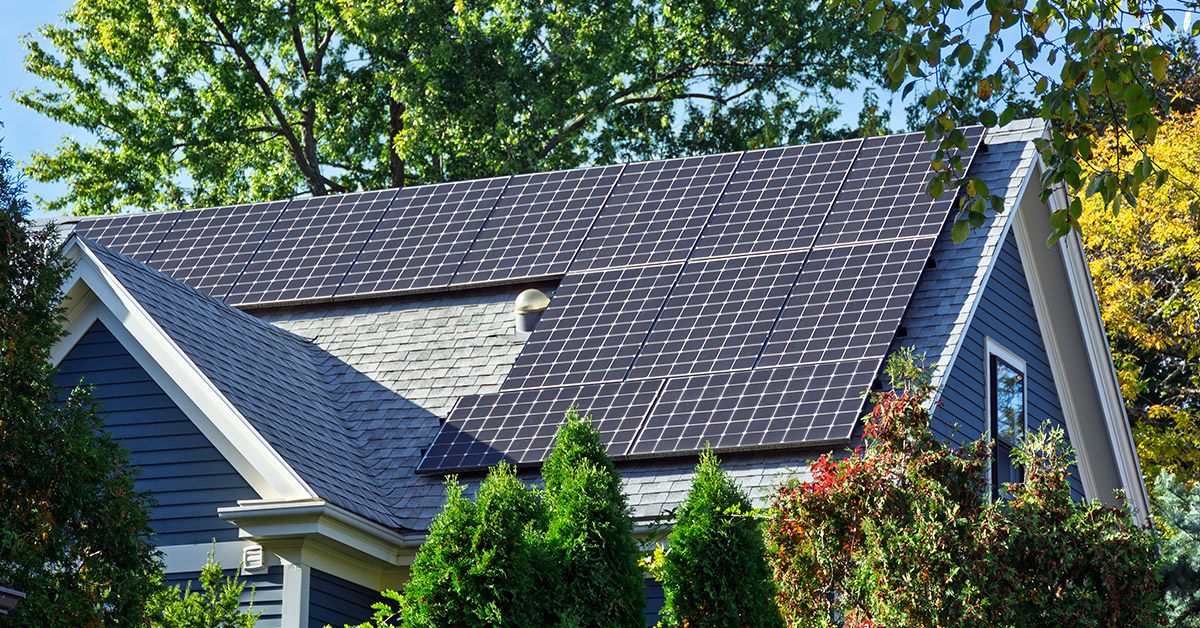 Selling a house with financed solar panels in Massachusetts? Learn about solar loan payoffs, UCC filings, buyer financing, and selling as-is.
 Heirs disagree about selling a house in Massachusetts? Learn about buyouts, probate, partition, and selling inherited property as-is. Copy
 Can't get homeowners insurance in Massachusetts? Learn how insurance problems affect selling your house and whether you can sell as-is.